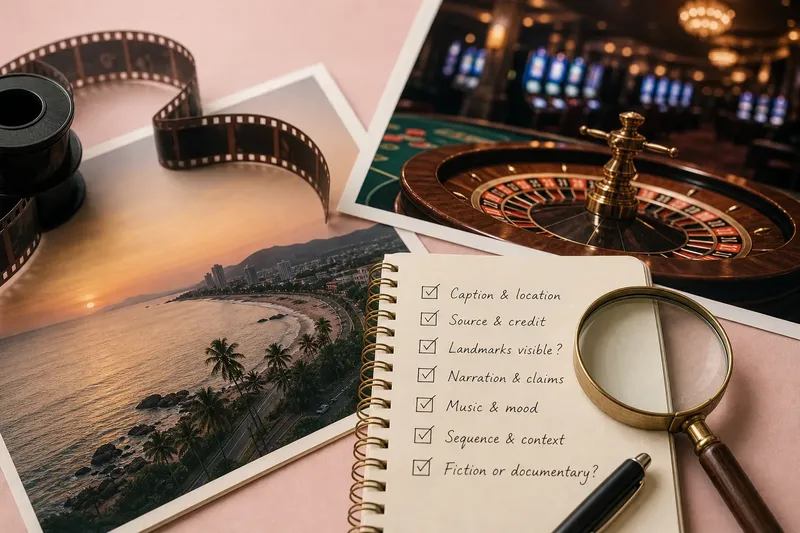
How Casino Stories Become Shared Stories in Bà Rịa–Vũng Tàu
Learn how to retell a casino story in Bà Rịa–Vũng Tàu while preserving its speaker, setting, and the personal memory that gives it meaning.

A family’s remembered evening at a casino in Bà Rịa–Vũng Tàu is not the same kind of story as a venue announcement, even if both mention the same place. A careful retelling keeps that difference visible, so one person’s memory does not quietly become a claim about everyone.
Casino stories acquire meaning through the details people choose to repeat: who spoke, what happened, and what the moment meant to them. The most useful retelling preserves those details while making clear where the teller’s own interpretation begins.
Keep the person at the center of a memory
A personal account may describe a visit, a conversation, a family ritual, or a feeling attached to a place. Those details can make a story vivid without making it representative of all residents or visitors.
Think of an anecdote as a photograph in a family album: it shows a real perspective, but not the whole neighborhood. Naming the speaker’s relationship to the story—visitor, worker, relative, or observer—helps readers understand what the account can and cannot tell them.
Separate remembered detail from later interpretation
Memory and interpretation often travel together. Someone may recall the lights outside a venue, then describe the scene as a sign that the area is changing. The first part is a recollection; the second is the speaker’s reading of it.
Both can belong in a retelling if they stay distinct. Phrases such as “she remembers” and “he took it to mean” show readers which details belong to the account and which express a later conclusion.
Give each voice its own place in the story
Casino-related stories may come from a resident, a venue, a journalist, or a relative passing along a memory. Their perspectives can overlap, but they have different purposes. A business description presents the business’s view; a personal account conveys an individual experience; reporting may describe a wider public discussion.
When those voices appear together, identify them rather than blending them into a single narrator. This lets readers hear the texture of the story without mistaking one speaker’s words for a shared regional view.
How can a personal casino story be retold fairly?
Should a speaker’s name be included?
Use a name only when the person has agreed to be identified and the name matters to the story. Otherwise, describe the speaker in a way that preserves relevant context without exposing private details.
How should uncertain memories be described?
Keep the uncertainty in the wording: “she recalls” or “he is not sure whether” is more faithful than presenting a hazy detail as settled fact. If the detail is not essential, leave it out rather than filling the gap with a guess.
Can one person’s account represent a community?
It can show how one person experienced a place, but it cannot by itself establish what a whole community thinks. Attribute the view clearly and avoid turning an individual memory into a collective claim.
What if two people remember the same event differently?
Present the accounts as distinct recollections and identify who remembers what. If the disagreement matters, preserve it rather than forcing a single version that neither speaker recognizes.
Build a retelling from details you can identify
Imagine an invented conversation in which a visitor recalls stopping near a casino venue in Bà Rịa–Vũng Tàu after dinner. The visitor remembers bright signs and a relative’s comment that the place felt unfamiliar, but cannot recall the exact words. A careful retelling keeps the setting and remembered impression, attributes the comment to the relative, and avoids quoting words the visitor cannot remember; the result is a personal scene, not a claim that the venue changed the whole area.
Before sharing a similar story, check each detail and choose what to do with it:
- Check who experienced the event: If the speaker was there, attribute the memory to that person; if the story reached you secondhand, say it was passed along or leave out details you cannot trace.
- Check the speaker’s connection to the place: If the person identifies as a visitor, worker, or resident, include that context when relevant; if their connection is unknown, do not assign one.
- Check whether a detail is remembered clearly: If the speaker is certain, report it as their recollection; if they are unsure, preserve that uncertainty or omit the detail.
- Check whether wording is exact: If the speaker remembers the precise phrase, quote it with attribution; if not, paraphrase and do not use quotation marks.
- Check whether a conclusion belongs to the speaker: If the speaker offers an interpretation, attribute it as their view; if the reteller adds it, identify it as the reteller’s interpretation or remove it.
- Check whether another account differs: If a second speaker remembers the event differently, present both accounts separately; if no second account is available, do not imply that the memory has been independently confirmed.
- Check for private details: If a name or personal fact is unnecessary, leave it out; if identification is essential, seek the person’s permission before sharing.
Let the story remain specific
A remembered encounter gains force from its particular details: a conversation after dinner, a view from a particular street, or a relative’s reaction. Those details do not need to stand for a sweeping change in Bà Rịa–Vũng Tàu to matter.
When you share a casino story in Bà Rịa–Vũng Tàu, keep the speaker, the scene, and the limits of their memory together. That small act of care leaves room for another person to tell a different story about the same place.